

Maintaining the cleanliness of our clothes requires more than just frequent washing. Certain types of clothing require a specific approach in order to preserve the integrity of the material, shape, color, and even finish. This applies to professional wear, fancy apparel, wedding dresses, and even linens we use in our homes on a daily basis.
If you are looking for dry cleaners in Glendale, AZ, it helps to understand which services are available and when professional garment care may be the right choice. Dry cleaning, wash-and-fold laundry, stain treatment, and specialty fabric cleaning each serve a different purpose.
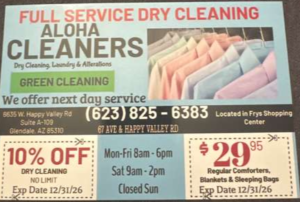
Aloha Cleaners provides dry cleaning and laundry services to the residents of Glendale and Happy Valley communities. These include wash & fold laundry, stain removal, care of leather and suede items, preservation of brides’ gowns, as well as selected home textile items.
This guide provides information about the types of cleaning services available, preparations for cleaning your clothes, and tips on selecting a local cleaner.
What Services Do Dry Cleaners in Glendale, AZ Offer?
Dry cleaners provide care for clothing and other fabric items that may need more attention than a standard home wash. The services available vary by business, so it is helpful to check whether a cleaner handles your particular garment or material.
Here are some common services to consider:
1. Professional Dry Cleaning
The dry cleaning process is a method in which a cleaning agent is used to clean clothing, instead of conventional water cleaning.
- This form of cleaning is considered for use on garments like suits, dress pants, formalwear, jackets, and other garments requiring special treatment.
- It is recommended that you first check the care label on your clothing before taking it in for cleaning.
- Professional cleaning may help keep your garment looking good, but only the appropriate one will work for your particular garment.
2. Wash-and-Fold Laundry
Wash-and-fold services provide an easy way to take care of one’s laundry. The garments are washed, dried, and folded to ensure that they are ready to be stored.
Wash-and-fold services may work well for those who have little time to manage their laundry.
Some of the common types of garments include everyday shirts, regular clothing, socks, and any washable clothes. Check the labels of the clothes to ensure that you handle them correctly before sending them to the laundry.
3. Spot Cleaning and Stain Removal
Various materials such as food, coffee, oil, makeup, ink, among others, can stain the clothes. This will depend on the nature of the stain as well as the material of the clothes.
Ineffective rubbing of the stain and using the wrong stain remover can increase the size of the stain as well as ruin the fabric.
In order to have successful removal of the stain, it is advisable to do the following things:
- Blot any spills that you notice on the clothes without rubbing the stain.
- Do not apply heat until you confirm that the stain has been successfully removed.
- Let the cleaner know the cause of the stain, if known.
- Inform him/her of any home remedy that you might have tried for the stain.
- Let the cleaner know whether the item requires a special treatment.
4. Suede and Leather Cleaning
Suede and leather should be cleaned in a way that differs from other washable materials. The use of water, regular household detergents, and hard rubbing may result in discoloration, stiffness, or even changes in texture.
Items such as leather jackets, suede apparel, and some other accessories may need special cleaning techniques.
Before giving away leather or suede garments for cleaning, inform about any stains, smell, or changes in texture. In addition, it will not hurt to find out if the person knows how to clean the particular material and what one can expect.
Never clean leather and suede with regular laundry items without manufacturer’s approval.
5. Bridal Dress Cleaning and Preservation
Wedding gowns may comprise fragile fabrics, embroidery, lace, beads, and different layers. They also may have stains that cannot be detected easily, including those from sweat, food and beverages.
Preservation of a bridal gown is concerned with taking care of the gown after the wedding ceremony and organizing proper storage for it.
When considering using the service, you should find out if the company can work with your dress’s fabric and ornaments. You may also inquire about stain evaluation, preservation products, packing, and storage options.
While proper care can preserve the dress, it will depend on various factors.
6. Household Textile Cleaning
Household fabric items can harbor dust, body oils, stains, and general dirt. Some of these fabric items can also be too big to wash at home.
Based on the care instructions and composition, fabric items that require professional cleaning can include:
- Comforters/duvets
- Suitably care-labeled pillows
- Table cloths and other household linens
- Fabric decor items needing special care
Consult the care instructions provided by the manufacturer to determine what cleaning process to apply to a fabric item.
7. Clothing Alterations
The process of cleaning is not all that goes into ensuring you have a functional wardrobe. Fit is another factor which determines how good the clothes look and feel.
Some alterations involve the alteration of hems and shortening of trousers among others to suit a particular need. All clothes cannot be adjusted in the same manner, and so the kind of adjustments possible depends on the design of the dress.
In cases where both cleaning and alterations are needed, ensure that you inquire on the best order of service.
Dry Cleaning vs. Regular Laundry
Dry cleaning and regular laundry are not interchangeable. Each method suits different garments and cleaning needs.
The following table provides a simple comparison.
| Feature | Dry Cleaning | Regular Laundry |
| Cleaning method | Uses a suitable cleaning solvent | Usually uses water and detergent |
| Common uses | Selected suits, formal wear, and delicate garments | Everyday washable clothing |
| Fabric suitability | Depends on the garment and care label | Depends on whether the fabric can be safely washed |
| Stain treatment | May help with certain oil-based and other stains | May suit many common washable-fabric stains |
| Main consideration | Fabric, trim, dye, and construction | Water temperature, detergent, and drying method |
| Best next step | Check the care label and ask the cleaner | Follow the garment’s washing instructions |
Which option should you choose? Start with the garment’s care label rather than assuming that one cleaning method is always better. When the instructions are unclear, ask a professional to assess the item.
How to Prepare Clothes Before Taking Them to a Dry Cleaner
Here are just a few ways to make this process easier on yourself and to help the cleaner get your requirements.
- Read the care label. Find any instructions on how to wash, dry, and professionally clean the garment.
- Examine the clothing. Note any stains, loose buttons, worn-out seams, or other pre-existing problems.
- Identify the stain. Mention how the stain occurred and roughly when.
- Tell the cleaner of prior cleaning attempts. Let the cleaner know whether you have tried any other products yet.
- Identify any delicate areas. This can include beads, embroidery, special trims, or other details.
- Make sure that your requirements are clear. Ask about cost, date of return, and any special requirements.
This will ensure that both of you know what to expect. It will also provide the cleaner with helpful information.
How to Keep Clothes Looking Good Between Cleanings
Professional cleaning is one step of the entire process of looking after your clothing.
- There are many everyday practices that will minimize wear and ensure your clothing remains usable.
- Follow the clothing care instructions rather than always washing everything the same way.
- Never leave wet clothes in an enclosed laundry bin for too long.
- Clean stains right away but without scrubbing delicate fabrics.
- Keep cleaned clothes in a dry area.
- Hang formal wear on appropriate hangers.
Various types of material require various kinds of care. If unsure, consult before treating it with any product that will cause permanent damage to the fabric.
Why Consider Aloha Cleaners in Glendale, AZ?
Aloha Cleaners is one of the places that caters to residents of Glendale and the Happy Valley region. The service providers have several services that cater to different clothing-related activities. Some of these services include dry-cleaning, wash and fold laundry, spot cleaning, suede and leather cleaning, wedding dress storage, and select textile cleaning at home.
Get Help With Your Garment Care
If you are looking for dry cleaning in Glendale, AZ, Aloha Cleaners offers a range of garment-care and laundry services for local customers.
Visit Aloha Cleaners’ website or call (623) 825-6383 to ask about available services, garment requirements, pricing, and turnaround times.
Frequently Asked Questions
1. How should I select dry cleaners in Glendale, AZ?
Choose one who knows how to clean your clothes, tells you their process, gives clear prices, and makes an accurate estimate for turnaround time. See if they have services like leather cleaning, bridal dress cleaning, or laundry services for households.
2. Which is superior, dry cleaning or home washing?
Both have their place, and neither is automatically better than the other. Dry cleaning might be the right way to go with some types of clothes, while regular washing is fine for others. Ask an expert if you’re not sure.
3. Do professional dry cleaners always take out all stains?
No. They will be able to tell you based on the nature of the stain, the fabric, the dye, the age of the stain, and prior treatments used. Tell them the cause of the stain, if possible, and avoid scrubbing and experimenting with other methods yourself.
4. Can comforters and pillows be taken to a dry cleaner?
The dry cleaners accept comforters, pillows, and other domestic fabrics depending on the size of the item, the type of fill material it uses, and other factors. Check if the cleaner will accept your particular item before dropping it off.
5. What information should I gather before leaving clothes at a dry cleaner?
Inquire whether the cleaner accepts your item, the price for the service, the estimated time for completion, and whether certain types of stains will require further attention. For expensive or delicate items, express your concerns before giving the okay to clean it.